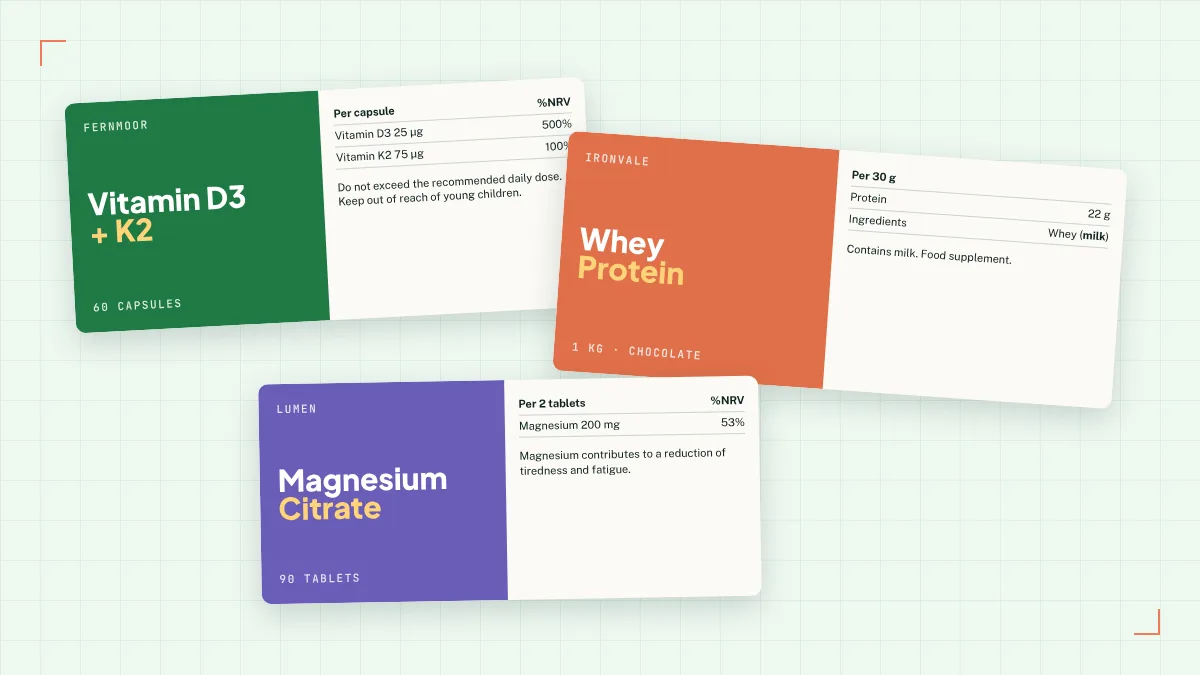
How to measure a bottle or tub
- Height. Measure the flat label panel between the shoulder and the base. Take 2–3 mm off the top and bottom so the label doesn’t ride onto curves.
- Diameter. Measure across the panel with calipers, or wrap a strip of paper round it and measure the strip.
- Wrap length. Circumference = π × diameter. For a label that doesn’t meet, take off a 3–5 mm gap. For a clear label that overlaps, add 5–10 mm.
Example: a bottle 48 mm across has a circumference of 151 mm. Leave a 5 mm gap and the label is 146 mm long.
Typical sizes
These are starting points. Bottles of the same volume vary between manufacturers, so always measure yours or send us a sample.
| Pack | Typical label (W × H) |
|---|---|
| 60cc capsule bottle | 130 × 40 mm |
| 100cc capsule bottle | 150 × 50 mm |
| 150cc capsule bottle | 175 × 55 mm |
| 250cc capsule bottle | 205 × 70 mm |
| 300 g powder tub | 260 × 80 mm |
| 1 kg protein tub | 350 × 110 mm |
| Stand-up pouch, front | 100 × 140 mm |
When everything won’t fit
Small packs must still carry all mandatory text at a 1.2 mm x-height. If it won’t fit:
- Use the full wraparound, not a front-and-back pair.
- Move marketing copy to the front and give the back panel to the law.
- Use a peel-and-reveal label, which adds a second printed layer.
See the full list of mandatory label information.
Not legal advice. This guide covers the general rules for food supplements sold in Great Britain. Check your own product with a regulatory adviser, your local Trading Standards team or your Primary Authority partner.