Step 1: Find the register
Search for the Great Britain nutrition and health claims (NHC) register on GOV.UK. It lists every authorised nutrition claim and health claim for products sold in Great Britain. For Northern Ireland, use the EU register instead.
Step 2: Search by nutrient or substance
Search for the nutrient, such as “vitamin C”, rather than the benefit. Each entry shows the claim wording, the conditions of use and any restrictions. If your ingredient has no entry, it has no authorised claim.
Step 3: Read the conditions of use
Most vitamin and mineral claims need the product to be at least a “source” of the nutrient: for supplements, usually 15% of the NRV per daily dose. Some claims have their own conditions. Creatine’s performance claim needs 3 g a day. The folate pregnancy claim needs a specific dose and timing.
Step 4: Word it on the label
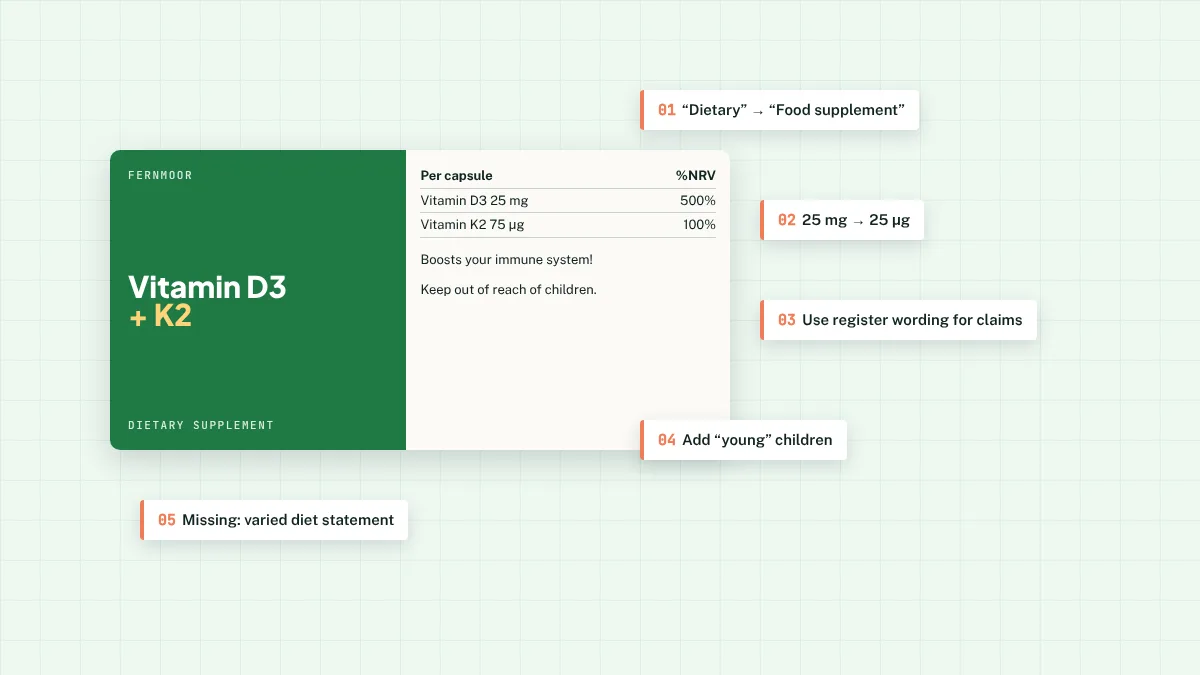
Use the register wording, or wording that means exactly the same to a shopper. “Vitamin C contributes to the normal function of the immune system” can become “Vitamin C supports normal immune function”, but not “boosts immunity”. Keep the nutrient in the claim; “supports immunity” on its own doesn’t say what does it.
Step 5: Add the required extras
When you make a health claim, the label also needs a statement about a varied and balanced diet and healthy lifestyle, the amount and pattern of use needed for the effect, and any warnings for people who should avoid the product.
General claims like “wellbeing”
Non-specific claims such as “supports wellbeing” or “for energy” are only allowed if an authorised specific claim sits next to them. “For energy*” with “*Vitamin B12 contributes to normal energy-yielding metabolism” is a common, compliant pattern.
Read more in our health claims guide.
Not legal advice. This guide covers the general rules for food supplements sold in Great Britain. Check your own product with a regulatory adviser, your local Trading Standards team or your Primary Authority partner.