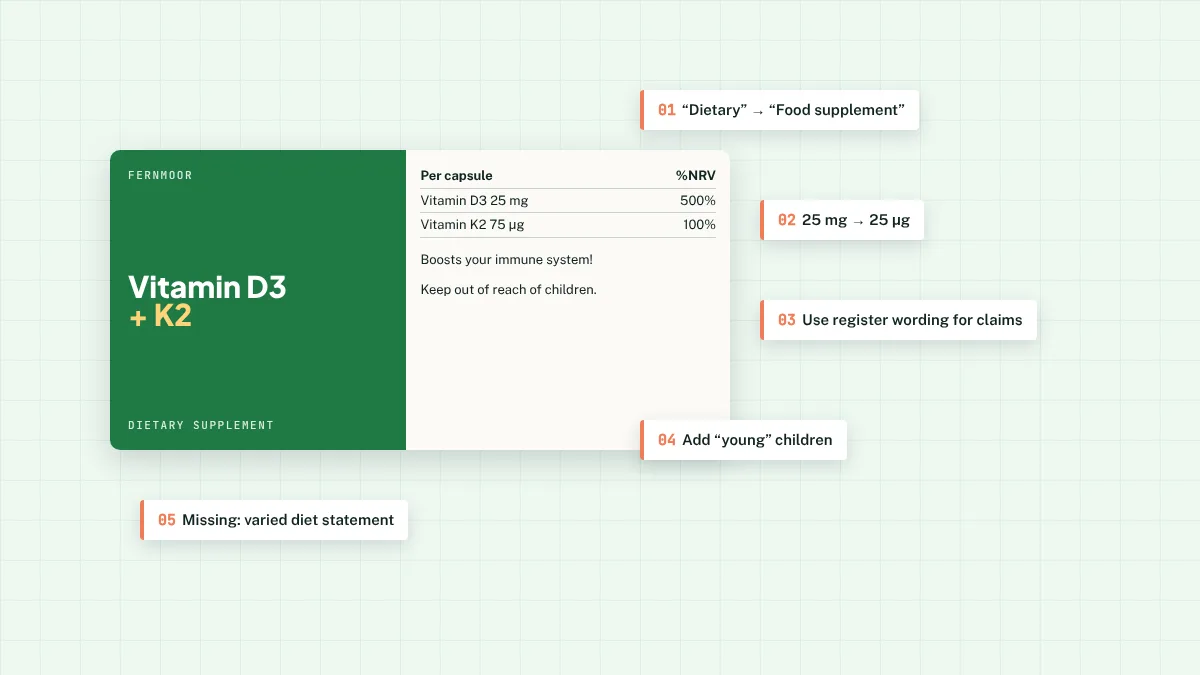
Prevent, treat, cure, heal
Food, including food supplements, must not claim to prevent, treat or cure a human disease, or suggest it does. That includes softer versions like “heals”, “remedy”, “relieves joint pain”, “fights colds” or “for arthritis”. A product presented this way may also be treated as an unlicensed medicine by the MHRA. Use an authorised claim instead, such as “Vitamin D contributes to the maintenance of normal bones”.
“Boosts immunity”
No authorised claim says a nutrient “boosts” the immune system. Vitamins C and D, zinc and selenium have the authorised wording “contributes to the normal function of the immune system”. You can use that exact wording, or a close equivalent that means the same thing, but not a stronger version.
Detox, cleanse, superfood, wellness
These are general health claims: they imply a benefit without saying what it is. General claims are only allowed when an authorised specific claim sits right next to them. On their own they break the rules, and “detox” in particular implies the body needs help removing toxins, which no authorised claim supports.
Fat burner, slimming, metabolism booster
Claims about the rate or amount of weight loss are banned outright (“lose 5 kg in a month”). “Fat burner” and “metabolism booster” are unauthorised health claims. A few weight-related claims are authorised with strict conditions, such as glucomannan in the context of an energy-restricted diet. Use exactly that wording and meet the conditions.
“Doctor recommended” and endorsements
Claims that refer to recommendations from individual doctors or health professionals are prohibited. A “developed with our nutritionist” story on your website is different from “recommended by doctors” on the label, but take care. Testimonials that make health claims are treated as your claims too.
“Clinically proven” and “scientifically formulated”
“Clinically proven” needs robust evidence for the exact product and the exact effect, and it still can’t claim more than the authorised health claim allows. In practice, most supplements can’t support it. “Scientifically formulated” is vaguer but still has to be true.
Probiotic
UK authorities have long treated “probiotic” as implying a health benefit, and there is no authorised claim for it. Many brands say “live cultures” or “friendly bacteria” instead, and describe the strains and counts. The advertising regulator’s guidance is that context decides whether it counts as a health claim, so keep it factual and pair it with an authorised claim where you can.
Pharmaceutical grade, medical grade, hypoallergenic
“Pharmaceutical grade” and “medical grade” imply medicine-level standards that a food supplement isn’t made to, so they are likely to mislead. “Hypoallergenic” suggests no one will react, which you can’t guarantee.
Source of, high in, sugar free
These are nutrition claims with fixed conditions. For vitamins and minerals, “source of” needs at least 15% of the NRV and “high in” at least 30%. “Sugar free” means no more than 0.5 g of sugars per 100 g. See our health claims guide and how to check a claim.
It isn’t just the label
The same rules apply to your website, Amazon listing, social posts and adverts. Words you avoid on the label but use in an Instagram caption still count. If in doubt, send it to us with your artwork for a compliance check.
Not legal advice. This guide covers the general rules for food supplements sold in Great Britain. Check your own product with a regulatory adviser, your local Trading Standards team or your Primary Authority partner.