How they differ
Flexographic printing uses a plate for each colour, which costs money and time to make. Digital printing goes straight from the file to the press, with no plates.
Where the costs cross
Digital has no setup but a higher cost per label. Flexo has a high setup but a lower cost per label. For a single design, the crossover is often somewhere in the tens of thousands of labels. Below that, digital is usually cheaper.
Multiple products change the maths
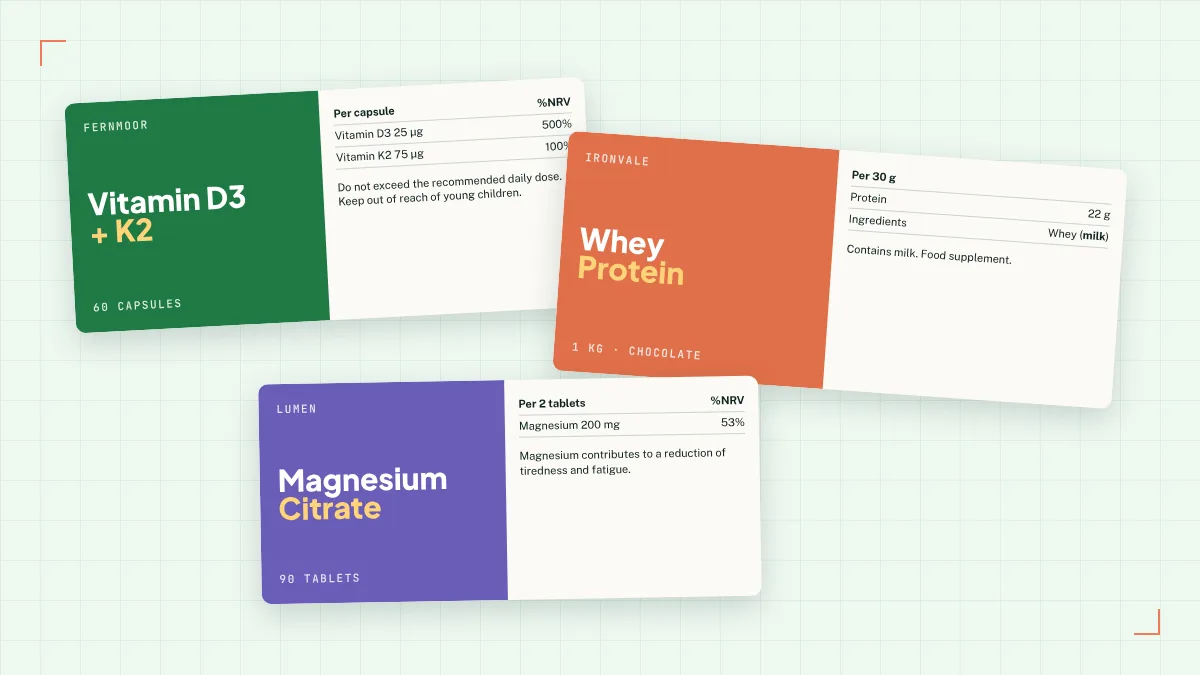
A range of eight products at 1,000 labels each is eight sets of plates on flexo, but one job on digital. Supplement ranges with many flavours or strengths almost always suit digital.
Formula changes
Supplement labels change often: new claims, new suppliers, new batch formats. With digital, a change costs nothing beyond the new proof. With flexo, it can mean new plates.
Colour and finishes
Modern digital presses match brand colours closely and can print white for clear films. Flexo can hit exact Pantone colours and run special inks. For most supplement brands, digital quality is more than enough. See our prices.
Not legal advice. This guide covers the general rules for food supplements sold in Great Britain. Check your own product with a regulatory adviser, your local Trading Standards team or your Primary Authority partner.