The difference in one line
NRV (nutrient reference value) is for vitamins and minerals. RI (reference intake) is for energy and the big nutrients: fat, saturates, carbohydrate, sugars, protein and salt. Both come from the same annex of the food information rules.
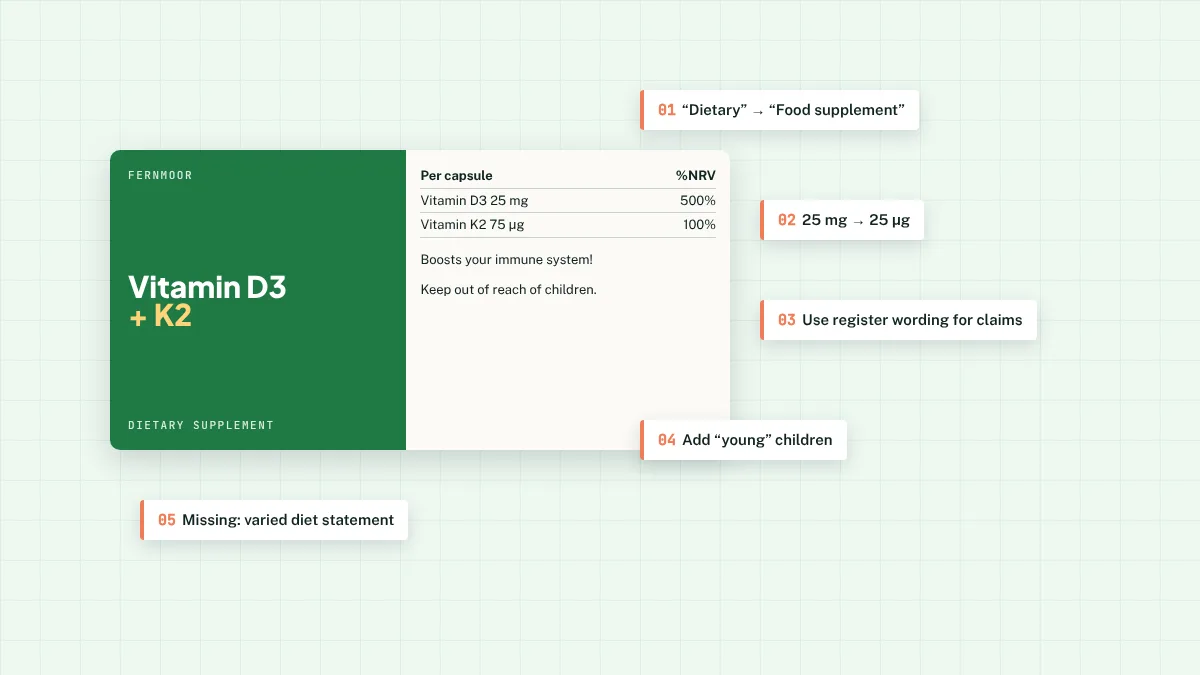
Food supplements: %NRV
A food supplement must show the amount of each nutrient or active substance per recommended daily dose. For vitamins and minerals, it must also show that amount as a percentage of the NRV. Ingredients with no NRV, such as omega-3, collagen, creatine or botanicals, show the amount only, with a note such as “†No NRV established”. Use our %NRV calculator.
Supplements don’t need a full nutrition table
The standard “back of pack” nutrition declaration (energy, fat, saturates and so on) isn’t required on food supplements. It’s optional. That’s why a vitamin bottle has a nutrient table but no calories.
Protein powders sold as ordinary food: %RI
Many protein powders, meal shakes and bars aren’t sold as food supplements; they’re ordinary foods. In that case the full nutrition declaration is mandatory, per 100 g: energy (kJ and kcal), fat, saturates, carbohydrate, sugars, protein and salt. You can add per-serving values and %RI, but only with the statement “Reference intake of an average adult (8400 kJ/2000 kcal)”.
If the product also has added vitamins and minerals, you can show those with %NRV in the same table.
The reference intakes
| Nutrient | RI (adults) |
|---|---|
| Energy | 8400 kJ / 2000 kcal |
| Fat | 70 g |
| Saturates | 20 g |
| Carbohydrate | 260 g |
| Sugars | 90 g |
| Protein | 50 g |
| Salt | 6 g |
Supplement or food: which is yours?
The deciding factor is how the product is presented. A concentrated source of nutrients in measured doses (capsules, tablets, sachets, “take one scoop daily”) is a food supplement and needs the supplement statements. A protein powder presented as a food for making shakes can be an ordinary food. Pick one and label consistently; mixing the two is a common mistake. See sports nutrition labels.
Not legal advice. This guide covers the general rules for food supplements sold in Great Britain. Check your own product with a regulatory adviser, your local Trading Standards team or your Primary Authority partner.