| NRV | 55 µg |
|---|---|
| 15% NRV (minimum for most claims) | 8.25 µg |
| Example ingredient form | L-selenomethionine or sodium selenite |
| Authorised claims (examples) | 6 |
Showing Selenium in the nutrient table
Give the amount of Selenium per daily dose, in µg, and the %NRV. A daily dose of 55 µg works out as 55 ÷ 55 × 100 = 100% NRV. Check other doses with our %NRV calculator.
The nutrient table names the nutrient. The ingredients list names the form used, such as L-selenomethionine.
Is there a maximum dose?
The UK has no legal maximum for selenium in food supplements. The Department of Health and Social Care advice, published on the NHS website, is: 350 µg or less a day from supplements is unlikely to cause harm.
Authorised health claims
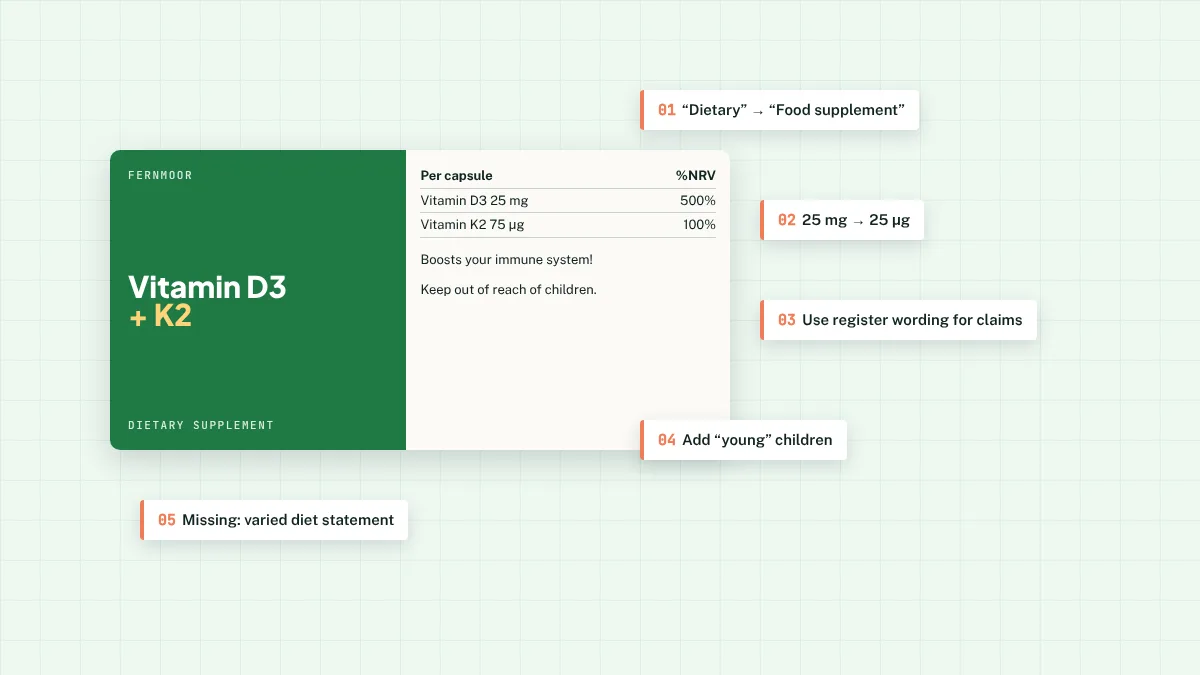
These are examples of authorised claims on the GB nutrition and health claims register. Use them word for word or with wording that means exactly the same, and only when the daily dose provides at least 15% of the NRV (8.25 µg).
- “Selenium contributes to normal spermatogenesis”
- “Selenium contributes to the maintenance of normal hair”
- “Selenium contributes to the maintenance of normal nails”
- “Selenium contributes to the normal function of the immune system”
- “Selenium contributes to normal thyroid function”
- “Selenium contributes to the protection of cells from oxidative stress”
Check the full register entry before you print: some claims have extra conditions. See our health claims guide and how to check a claim on the register.
Labelling notes
Selenium is measured in micrograms. Entering it in mg is the most common unit error we see on mineral tables.
Check before you print. Claims and dose advice are summarised from the GB nutrition and health claims register and the NHS vitamins and minerals pages, as of October 2026. Confirm your final wording against the register.